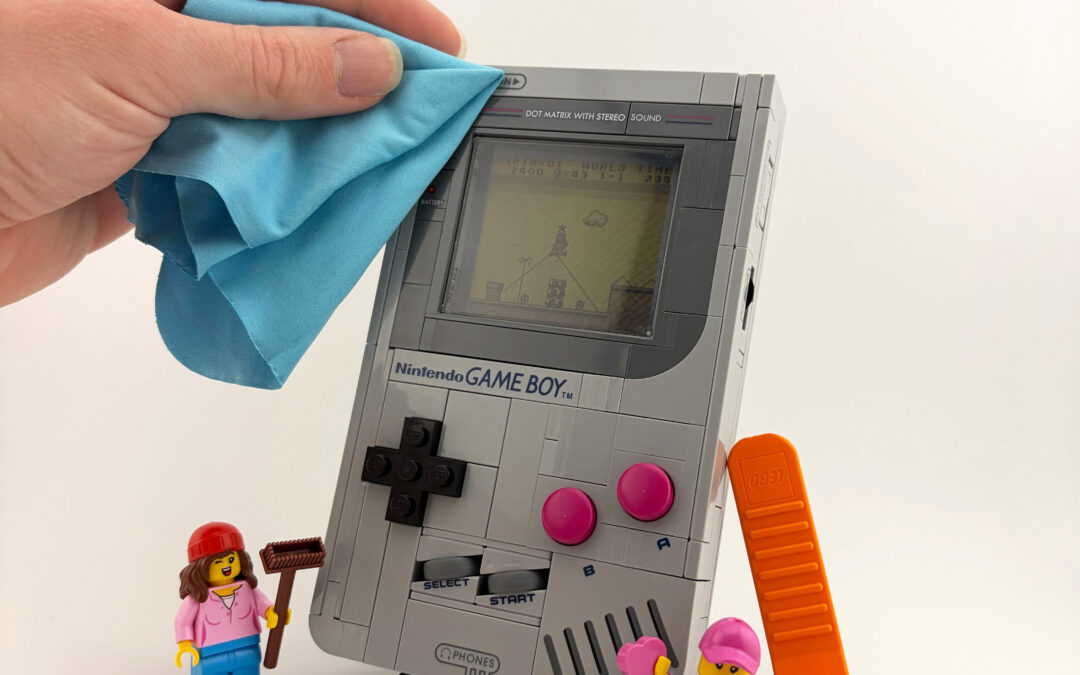
LEGO bricks are certainly durable–you’d know this if you’ve ever stepped on one–but that doesn’t mean that they don’t need a little bit of TLC.
A custom bouquet of LEGO flowers may not wilt, but it can still get an unhealthy layer of dust.
Whole kingdoms may be made out of loose bricks by your kids, but nobody wants a world of germs on each piece.
At Bricks & Minifigs®, we love our LEGO products, which is why we keep them clean. You don’t have to go out and buy a whole LEGO cleaning kit. We’re here to make it simple and easy to keep your LEGO sets and pieces in the best condition possible.
Why Should You Clean LEGO Pieces?
Whether you’re wanting the coolest LEGO display possible in your living room or you are looking to sell your pieces (hopefully at your local Bricks & Minifigs), keeping your bricks clean is a must.
Not only does a good clean now and then make your sets shine with new life wherever you’re displaying them, but it can help you out in other ways. Cleaner sets means a nicer display, and sanitary bricks equals less potential germs for you and your family.
And besides the health and aesthetic benefits, a good clean can help make sure you get the best resale value for your sets and bricks if you’re looking to sell.
For us at Bricks & Minifigs, it’s way easier to turn around and put your bricks right on the shelf if they don’t have to be scrubbed down first.
However you look at it, keeping your LEGO products clean is a smart idea, and it’s easier than you’d think.
How to Clean LEGO Pieces
How you clean your LEGO products depends on whether you’re dusting off a completed set on display or tackling that box of bulk that’s starting to look a little dingey. There’s different levels of cleanliness, and we’ve got tips on the best ways to clean LEGO for all of them.
Cleaning LEGO Bricks
For your loose bricks and random pieces, cleaning is pretty straightforward.
Cleaning Materials You’ll Need:
- Soap or mild detergent
- Water
- Soft cloth or sponge or bristle brush
- Soft or microfiber towels
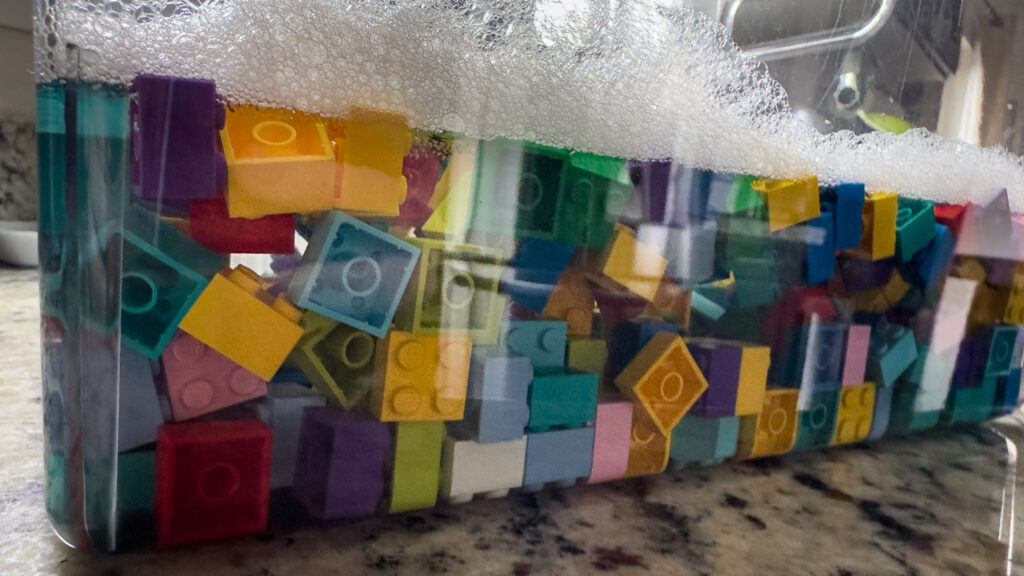
How to Clean LEGO in Bulk:
Bricks, minifigs, and other pieces just need a wash in some warm water with a mild detergent or dish soap. Follow these steps for a good clean for your LEGO bricks:
- Fill a basin, bowl, or sink with warm water (though probably not your bath tub). Water shouldn’t be hotter than 104° F. Avoid getting the water too hot, as excessive heat can warp the bricks, damage stickers, and change their shape.
- Add dish soap or detergent. A few drops per gallon of water should be enough.
- Allow any pieces with caked on dirt or grime to soak if needed.
- Gently scrub pieces with a soft cloth, soft bristle brush, or sponge until clean.
- Rinse pieces with clear water.
- It’s best to dry them with a soft towel or air dry them.
Important: When it comes to drying, do not put LEGO pieces in the dryer or leave them out in the sun. Even a little bit of sunlight can generate enough heat to change the shape of the plastic, and the dryer could be much worse.
For more information, you can read about it directly from the LEGO Group here.
Cleaning Built LEGO Sets
If you’re looking to clean your completed LEGO sets, then it’s a slightly different process. While it’s possible to wash your sets in soap and water just like your bricks, it can take a lot longer to dry when the water gets into all the nooks and crannies.
How to Clean LEGO Sets:
Instead, we recommend taking the same warm, soapy water and using a soft bristle toothbrush to clean your sets.
Make sure to use a LEGO cleaning brush with soft bristles since anything harder can scratch the plastic and leave marks on your bricks.
- Take your brush, dip it in the soapy water, and gently clean your completed sets with it. Avoid scrubbing too hard, even with the soft bristles.
- You can dry your sets the same way as your loose bricks, by allowing them to air dry or using a towel or cloth.
Dusting LEGO Sets and Models
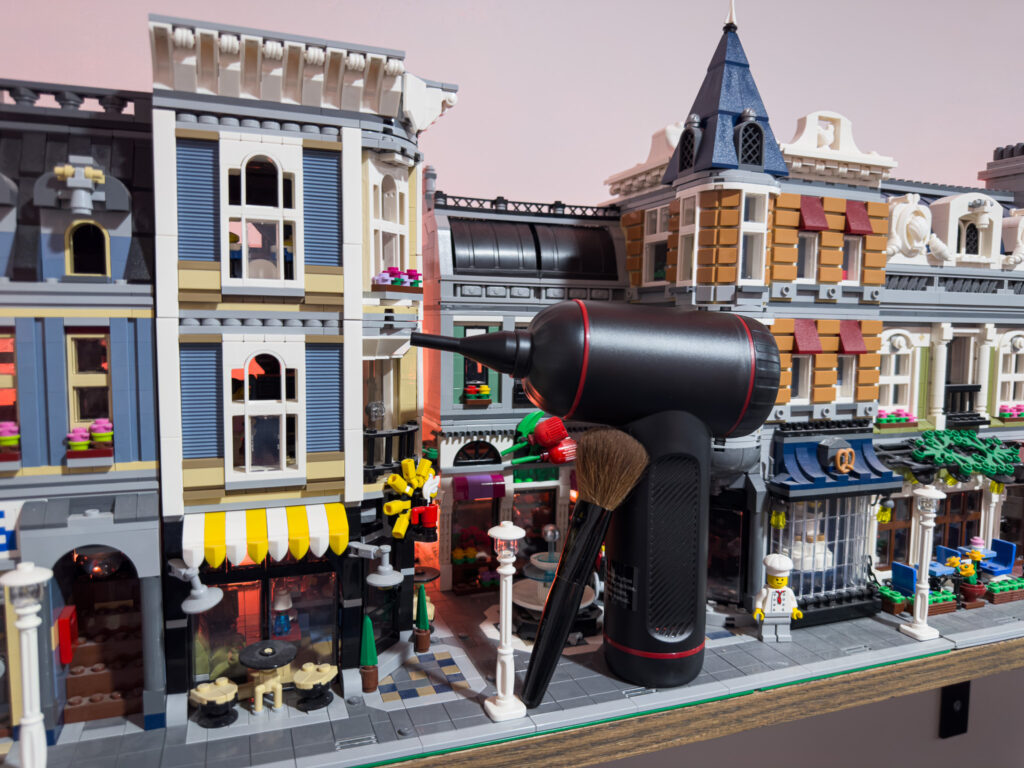
If you don’t want to fully clean your set with soap and water, as it really only needs a little dusting, here’s what we suggest for cleaning dusty LEGO sets.
Cleaning Materials You’ll Need:
- Duster (for larger sets)
- Makeup brush (or other soft brush)
- (optional) Mini vacuum cleaner
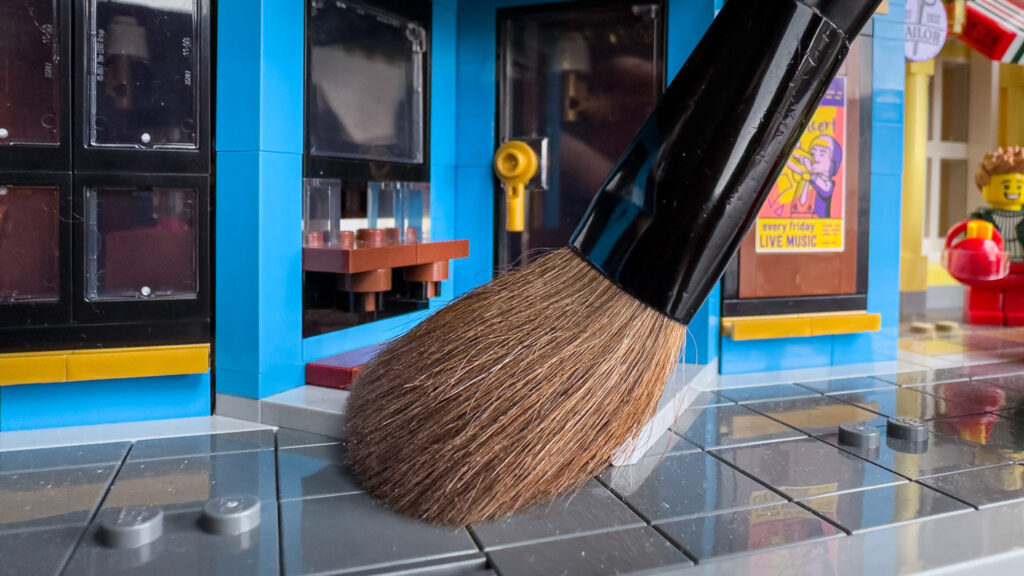
Unless you’re dusting a truly massive set or MOC build, a regular duster probably won’t get in all the tight spaces, but that doesn’t mean you need a specific LEGO dusting brush. Any soft brush will work well, even soft cloths in a pinch.
How to Dust LEGO Sets
For this more precise dusting, a soft brush of some sort (makeup brushes are actually great for this) or mini vacuum made for cleaning toys or other small items. There are even custom LEGO vacuum cleaners available if you’re a dedicated fan.
To dust your sets, simply sweep off the dust with the brush or use the mini vacuum to suck it away. Dusting cloths can also work, but they may have a harder time reaching tight corners.
Do it as often or as little as you’d like to keep your sets looking like they were just built!
How to Keep LEGO Sets Dust-Free
Not all LEGO sets are played with; some of them are just for display. If you have display sets that you’d like to avoid cleaning and dusting often, it could be useful to look into display cases.
There are several different companies that produce custom display cases for LEGO sets, several of which are sold at your local Bricks & Minifigs. We encourage you to come in and browse our selection of LEGO storage and display cases.
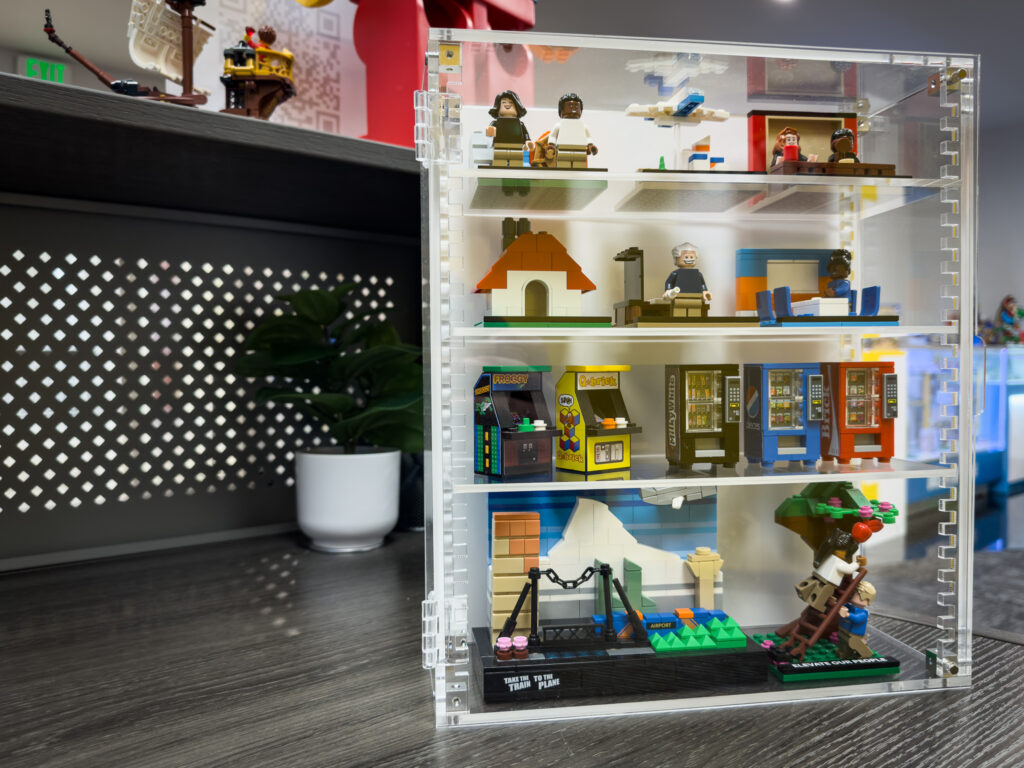
If you’re just storing loose LEGO bricks, then a tub or bin with a lid is a great way to limit dust accumulation and keep your bricks clean for longer.
Besides storage cases, air filters and air purifiers can help limit the amount of dust building up on your displayed LEGO sets–and other decorations–throughout the room.
Whatever you choose to do, there’s plenty of ways to keep your LEGO bricks in pristine condition.
FAQ on Cleaning and Dusting LEGO Pieces and Sets
Q: Can LEGO be washed in the washing machine or in a dishwasher?
A: Some people choose to wash their LEGO bricks in the dishwasher or put them in a garment bag and wash them in the washing machine. While this can clean your bricks, it’s much easier to damage them or your washing machine using these methods. All it takes is one spare piece to get in the wrong spot. For this reason, we recommend avoiding using these machines to clean your bricks.
Q: How do I clean LEGO base plates?
A: If you have a build already on your baseplate that you want to keep, then clean it in the same way as we mentioned for sets above. If it’s just individual baseplates, you can wash them the same way you do loose pieces. It might be helpful to get a bristle brush though.
Q: Is cleaning LEGO pieces with vinegar okay?
A: A vinegar solution can clean LEGO pieces, but it should be diluted in water. It should also never be used on chrome pieces, printed pieces, or pieces with stickers as it can strip the paint or design. For this reason, it’s generally safest to use solutions with dish soap or mild detergent.
Q: Is cleaning LEGO pieces with bleach okay?
A: Cleaning LEGO pieces with bleach is not a good idea. While it can disinfect them, it can also damage, discolor, and even make the plastic more brittle.
Q: Why shouldn’t I dry LEGO bricks in the sun?
A: Drying bricks in the sun is not recommended for two reasons. One, excessive heat–including strong direct sunlight–can warp the shape of bricks. And two, prolonged exposure to sunlight can bleach the bricks, sapping them of color. It can also make them more brittle.
Q: Why can’t I dry LEGO bricks in the dryer?
A: Putting LEGO pieces in the dryer doesn’t work for the same reason as drying them in sunlight. High amounts of heat can warp the plastic, and the bouncing motion of the dryer would only make this worse. Plus, the noise of LEGO pieces rotating and clanging around in the dryer is not especially pleasant.
Q: Can pressurized air be used to dust LEGO sets?
A: Many pressurized air cans use extremely cold air that can end up damaging pieces. High pressure can also blow pieces off the build, potentially damaging more fragile pieces.
If you do choose to use pressurized air, make sure to hold it 6-8 inches away from the bricks and never use the can upside down. (An upside down can is more likely to drip liquid that can freeze or stain the plastic.)
Q: What can I spray on LEGO to prevent dust?
A: Generally, it’s safest to just remove dust as it accumulates. There may be various sprays to prevent dust buildup, but there’s also the possibility they could damage or discolor the plastic.
Q: How does dust affect LEGO pieces?
A: Dust does not usually damage LEGO pieces directly. However, if too much is allowed to build up, it’s possible to scratch the plastic and leave small marks, especially if it’s not removed by a microfiber cloth or soft brush.
Q: Why do clean bricks and sets get me a better deal when I sell at BAM®?
A: Clean bricks and sets get a better deal at Bricks & Minifigs because they don’t require as much work and turnaround time for employees to get them back on the shelves on our bulk bin table for sale. It also makes it easier to evaluate the condition of the set if it’s clean. People are less likely to buy dirty or damaged LEGO products, so the cleaner and more pristine, the better!
Conclusion
Whether you or your kids are playing with your LEGO bricks constantly or they’re part of a set sitting proudly on a shelf, they sometimes need a little cleanup.
Fortunately, it’s not a difficult process, and we’ve gone over all the things you need to know when cleaning your favorite bricks.
And once they’re clean, maybe it’s worth a trip to Bricks & Minifigs to find some more bricks or sets. After all, you can never have too many.